Six years ago, Apalachicola Riverkeeper set out to undo decades of damage from Army Corps of Engineers dredging on our river. With $4.7 million from the National Fish and Wildlife Foundation, we've now restored three key sloughs — East River, Douglas Slough, and Spider's Cut — and fresh water is flowing back into the floodplain and bay during drought for the first time in years. It's some of the best news our river has had in a generation.
Now the Corps wants to dredge again. Speak up now to tell the Corps to terminate its dredging study, to prevent …
Six years ago, Apalachicola Riverkeeper set out to undo decades of damage from Army Corps of Engineers dredging on our river. With $4.7 million from the National Fish and Wildlife Foundation, we've now restored three key sloughs — East River, Douglas Slough, and Spider's Cut — and fresh water is flowing back into the floodplain and bay during drought for the first time in years. It's some of the best news our river has had in a generation.
Now the Corps wants to dredge again. Speak up now to tell the Corps to terminate its dredging study, to prevent the destruction of this rich and diverse wildlife habitat.
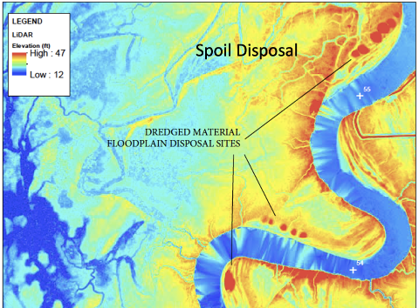
Last year, the Army Corps launched an Environmental Impact Statement to evaluate resuming navigational dredging on the Apalachicola River, with spoil disposal along the riverbanks under consideration. Under its proposed plan, the Army Corps would dredge some 27.8 million cubic yards of sand from the Apalachicola River over the next 30 years and dump that sand on the river’s floodplain and banks—burying as much as 926 acres of wetlands and essential habitat and blocking the flow of water into the river’s vital floodplain.
If that goes forward, it threatens to undo the restoration work we've already completed — and it puts at risk an additional $25 million NFWF has earmarked for the next phase of slough restoration. NFWF has been clear: that funding depends on what the Corps does with this dredging project.
We've seen this before. The Corps' own history on this river includes Sand Mountain — a three-story pile of dredge spoil south of Wewahitchka, visible from satellites, that the Corps was supposed to clean up and never did. In a congressional hearing, the Corps admitted that maintaining the river for barge traffic returned just 40 cents on the dollar.
This is the moment to speak up. The Corps is gathering public input now, ahead of the formal EIS release. Submit your comment and urge the Corps to terminate its dredging study. Tell the Corps Don’t “Spoil” Our River and Bay. A free-flowing Apalachicola - not another Sand Mountain - is the legacy we choose.